Enterprise merchants lose between 9% and 20% of annual revenue to payment failures (industry composite, 2025). In cross-border expansion, that range widens fast. The question of which is the best platform for cross-border payments is really a question about infrastructure architecture, and the answer locks in your approval rates, operational costs, and speed to new markets for years.
Key Takeaways
- Multi-PSP smart routing delivers an average 8% authorization rate uplift across enterprise merchants on Yuno's platform (Yuno platform data, 2026).
- Adding a new country to a pre-integrated orchestration layer takes days; legacy point-to-point builds take months per market.
- Provider neutrality is load-bearing: a platform that owns its own acquiring cannot give you an unbiased routing recommendation.
- Local payment method gaps are the single largest driver of checkout abandonment in new markets, ahead of price and friction combined.
- Network tokenization lets stored credentials survive a PSP switch, protecting subscription revenue when you swap acquirers in a market.
Why Single-PSP Architectures Break at the Border
A single-PSP setup is optimized for one market, one set of issuer relationships, and one regulatory environment. When you expand, every one of those assumptions changes.
We see this pattern repeatedly in our integrations across enterprise travel, gaming, and marketplace verticals. A merchant enters a new European or APAC market on their existing provider, watches approval rates drop 5-8 points relative to domestic benchmarks, and spends months diagnosing the cause. The cause is almost always the same: the incumbent provider has weaker issuer relationships in that market, no local acquiring presence, or gaps in preferred payment methods.
In Germany, iDEAL and SEPA Direct Debit drive significant checkout completion rates. In India, UPI handles the majority of digital transactions. In Southeast Asia, GrabPay and local wallet coverage determine whether a customer converts at all. A single PSP optimized for US card transactions carries none of that infrastructure by default.
The deeper problem is visibility. When approval rates drop in a new market, a single-PSP dashboard shows you the failure codes but not the comparison point. You have no way to know whether a different acquirer would perform better on the same transaction. That information gap is expensive. Cross-border payment fragmentation has turned what used to be an access problem into an optimization problem, and optimization requires a neutral view across providers.
What Makes a Platform the Best Choice for Cross-Border Payments
The best platform for cross-border payments gives you provider-agnostic routing, local method coverage, and real-time performance visibility from a single integration point. These three properties separate infrastructure that scales globally from infrastructure that breaks incrementally.
Here is what each of those properties requires in practice.
Provider-Agnostic Routing
Routing decisions should be driven by approval rate, cost, and latency data, not by which rail the platform owns. Yuno owns no acquiring and sells no payment rails. That neutrality means every routing recommendation is optimized for merchant outcome, with no hidden incentive to favor one provider over another. Only a neutral layer can compare all your providers on the same transaction and surface which one would have won.
In our platform data, merchants who move from fixed single-PSP routing to dynamic multi-PSP routing see an average 8% uplift in authorization rates (Yuno platform data, 2026). Across meaningful transaction volumes, that is a significant recovery of revenue that was already being lost silently.
Local Payment Method Depth
Coverage across 1,000+ payment methods globally means that when a merchant activates a new market, the local methods are already integrated. No new API work. No waiting for a PSP to build a new connector. A ride-hailing platform that expanded across ten new markets in eight months did it by activating pre-built integrations, not by building them from scratch.
That speed difference is not marginal. Point-to-point integrations for a single new PSP in a new market typically consume 6-12 weeks of engineering time, plus compliance review, plus QA. An orchestration layer converts that into a configuration task measured in days.
Real-Time Monitoring With Automated Response
Cross-border stacks are more fragile than domestic ones. Provider performance degrades differently by region, and the time between an issue starting and a team detecting it manually averages several minutes at best. For high-volume merchants, several minutes of undetected degradation at a peak hour in a key market costs real revenue.
Automated monitoring changes that equation. Custom thresholds by provider, country, and currency mean the system detects the anomaly and reroutes traffic before a human analyst even opens a dashboard. A large on-demand delivery platform reduced their payment issue response time from minutes to seconds using this approach, and cut analyst time spent on disruption resolution by 80%.
The Infrastructure Decision That Determines Expansion Speed
The decision that most determines how fast a merchant can add countries is whether their payment stack requires a new integration per market or activates by configuration. This is the architectural fork that separates expanding in weeks from expanding in months.
Based on our infrastructure, the merchants who expand fastest share one architectural property: their provider connections sit behind a single API, and that API already carries the integrations they need. When they decide to enter a new market, the payment side is a configuration task, not an engineering project. The checkout renders locally-preferred methods automatically. Routing rules can be set by country before the first transaction clears.
The merchants who expand slowest are usually running a point-to-point architecture built for their original market. Each new PSP requires a new integration. Each new payment method requires a new code path. Compliance for a new market surfaces after the engineering work is already underway. The payment team spends more time managing integrations than managing performance.
The hidden cost of that architecture is not just time. It is optionality. When a new local provider emerges that delivers better approval rates in a specific corridor, the merchant with a single orchestration layer can route to it in days. The merchant with a point-to-point build needs a full integration cycle before they can test it. The challenges in cross-border payments are increasingly about responsiveness to market conditions, not just access to markets.
How Smart Routing Works Across Multiple Markets
Smart routing evaluates every transaction against real-time provider performance data and routes to the acquirer most likely to approve it. The routing logic can be configured by BIN range, card brand, country, currency, payment method, or any combination of those signals.
For cross-border merchants, this matters because issuer-acquirer relationships are geography-specific. A UK-issued Mastercard processed through a US acquirer carries a different approval probability than the same card processed through a UK acquirer with a direct issuer relationship. Smart routing accounts for that gap automatically, without requiring the merchant's team to build or maintain the logic manually.
Fallback routing adds another layer of recovery. When a transaction fails at the primary provider, the system retries at a secondary provider before returning a decline to the customer. In our platform data, this fallback mechanism recovers 8% of transactions that would otherwise have failed (Yuno platform data, 2026). At enterprise transaction volumes, that recovery rate compounds into significant revenue.
A/B testing across providers is built into the same routing layer. Merchants can split traffic between two acquirers in a new market, measure the approval rate and cost differential, and adjust the split based on live results without touching code. Smart routing at the infrastructure level makes this a continuous optimization process rather than a one-time configuration.
Protecting Recurring Revenue When You Swap Providers
Network tokenization is the mechanism that lets subscription revenue survive a PSP switch in a new market. Without it, changing acquirers means re-collecting stored credentials from every affected customer.
We have seen this problem surface repeatedly when merchants expand into markets where their original acquirer underperforms. The merchant identifies a better local provider. The routing switch is straightforward. But if stored card credentials are vaulted at the original PSP, those credentials cannot move. Subscriptions break. Retry logic fails. Customer communication has to go out asking for payment method re-entry, which is a churn signal at every step.
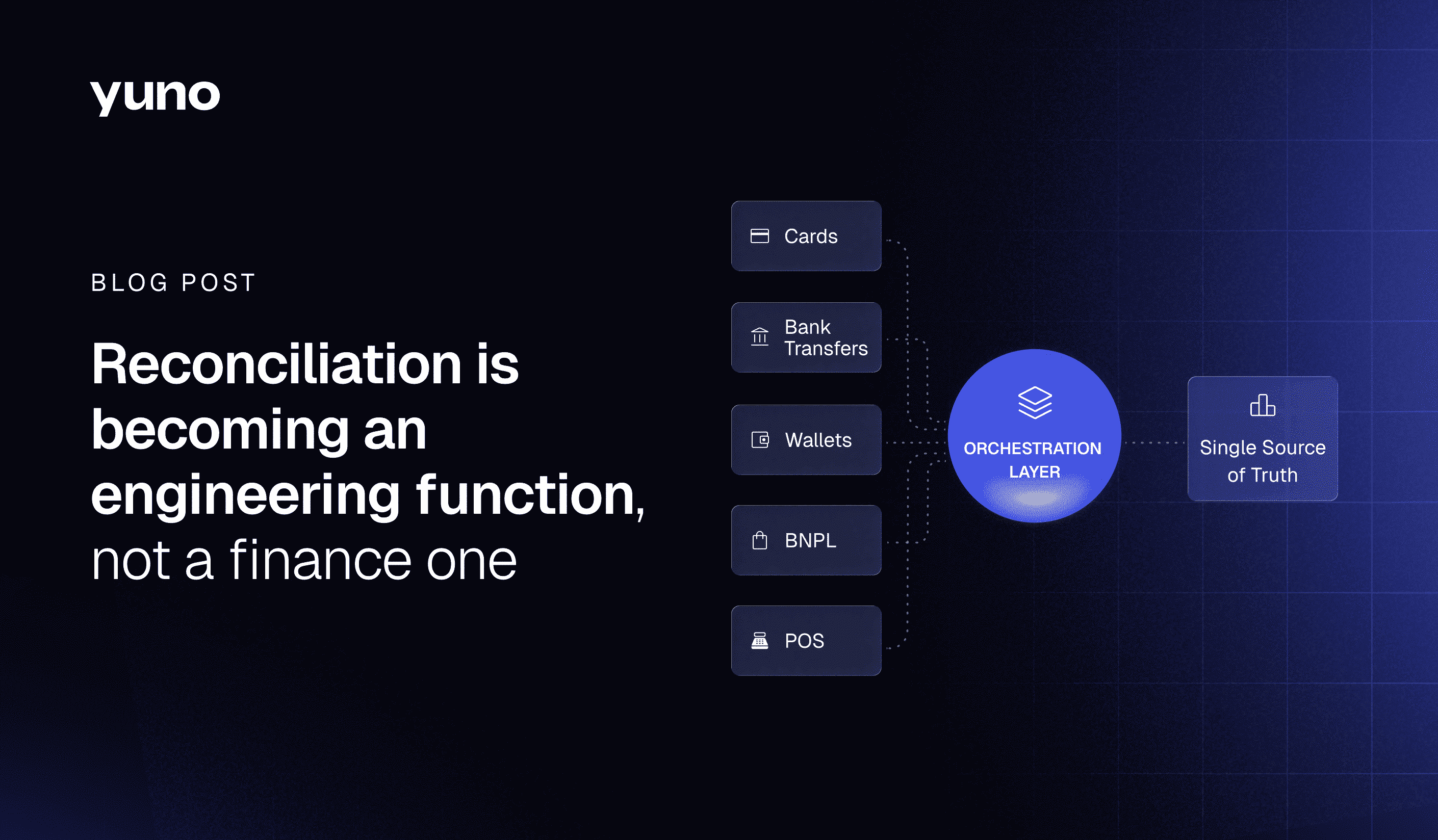
Network tokens are issued by the card networks directly, not by the PSP. They survive acquirer changes because the token relationship sits above the acquirer layer. Vault portability extends this to all stored credentials, so a merchant running subscriptions across multiple markets can swap the underlying acquirer in any corridor without affecting the recurring payment flow. Reconciliation across multiple PSPs is also simplified when tokens are portable, since the credential identity stays consistent across provider changes.
What the Comparison Looks Like: Single-PSP vs. Orchestrated Multi-PSP
The performance gap between a single-PSP setup and an orchestrated multi-PSP stack compounds as a merchant adds markets. Each new country where the incumbent PSP has weaker issuer relationships is another drag on global approval rates.
In a single-PSP setup, the merchant has one set of issuer relationships, one routing path, and one data source for performance measurement. Adding a market means negotiating a new contract, waiting for integration, and accepting whatever approval rate the PSP delivers in that corridor. Optimization requires manual analysis and manual rule changes. Monitoring depends on the PSP's own reporting, which cannot compare performance against alternatives.
In an orchestrated multi-PSP setup, every new market activates against a pre-existing provider network. Routing is dynamic, driven by real-time data. Monitoring is automated, with custom thresholds per country and currency. Performance comparison across providers is available from a single dashboard, with no dependency on individual PSP reporting. New payment methods activate by configuration, not by engineering cycle.
The practical difference shows up in three metrics: approval rates (higher with dynamic routing), time to new markets (days vs. months), and operational overhead (automated monitoring vs. analyst-dependent response). Across the enterprise merchants on Yuno's platform, the authorization rate uplift from smart routing averages 8% (Yuno platform data, 2026). That figure reflects the combined effect of better routing, automated fallbacks, and continuous optimization across providers.
- Approval rates (higher with dynamic routing)
- Time to new markets (days vs. months)
- Operational overhead (automated monitoring vs. analyst-dependent response)
AI-Assisted Payment Operations Across Borders
The operational burden of managing payment performance across multiple markets grows faster than headcount can keep up. AI tooling is where that gap closes.
Payments Concierge gives payment operations teams multi-PSP visibility in a natural language interface, deployed in Slack or on the dashboard. A head of payments can ask "show me approval rate by country this week versus last week" and get an answer in seconds, without opening multiple PSP portals or running a manual report. The differentiator is that only a neutral orchestration layer has access to that comparison data. A single PSP can only show you its own performance.
NOVA addresses the downstream problem: failed payments that have already happened. When a transaction fails, NOVA contacts the customer automatically via WhatsApp or voice in over 70 languages, guiding them through recovery. Up to 75% of failed transactions contacted through NOVA are recovered (Yuno product data, 2026). For cross-border merchants where a single failed transaction can represent a high-value order or subscription renewal, that recovery rate is material.
Consumer behavior is also shifting toward AI-mediated purchasing. AI traffic to U.S. retail sites grew 693% year-over-year during the 2025 holiday season (Adobe Digital Insights, January 2026), and 35% of U.S. consumers now use AI at the product discovery stage (Adobe 2026 AI and Digital Trends Report). Merchants building cross-border stacks in 2026 need infrastructure that can handle AI-initiated transactions, not just human-initiated ones. Gartner projects 20% of digital commerce transactions will execute via AI platforms by 2030 (Gartner, 2025).
The Practical Takeaway for Payment Leaders Evaluating Cross-Border Infrastructure
The infrastructure decision that matters most before expansion is whether your payment stack requires a rebuild for every new market or activates by configuration. Everything else follows from that architectural choice.
Start by auditing three things in your current stack. First, how many provider integrations are point-to-point, and what is the engineering cost of adding one more. Second, what your approval rate differential looks like between your best-performing domestic market and your most recently added international one. Third, whether your monitoring system can detect a provider degradation in a new market in under a minute and respond without a human in the loop.
- How many provider integrations are point-to-point, and what is the engineering cost of adding one more.
- What your approval rate differential looks like between your best-performing domestic market and your most recently added international one.
- Whether your monitoring system can detect a provider degradation in a new market in under a minute and respond without a human in the loop.
If the answers to those three questions reveal gaps, the path forward is an orchestration layer that sits above the provider network and routes, monitors, and optimizes without requiring a new integration for every market move. The infrastructure decisions that make or break global expansion come down to how much of that work is configuration versus engineering. The merchants who expand fastest have already resolved that question in favor of configuration.
- What gaps exist in provider coverage for your target markets.
- Whether your current monitoring can detect and respond to degradation automatically.
- Whether stored credentials are portable if you need to swap acquirers.
Yuno connects to 200+ countries and 1,000+ payment methods from a single API, with smart routing, automated monitoring, network tokenization, and AI-assisted operations available as configuration on top of the same integration. New markets switch on in days. Providers swap without a migration. Approval rates optimize continuously, without a dedicated routing analyst for each corridor.
Frequently Asked Questions
How do I evaluate the best platform for cross-border payments without running a full RFP?
Run a focused benchmark on three metrics: authorization rate in your target new market, time to activate a local payment method, and monitoring response time to a provider degradation. These three tests reveal the architectural properties that matter most for cross-border scale, without requiring a full procurement cycle.
- Authorization rate in your target new market.
- Time to activate a local payment method.
- Monitoring response time to a provider degradation.
What is the right time to add a second PSP in a new market?
Add a second PSP when your primary provider's approval rate in a specific corridor falls more than two percentage points below your domestic benchmark, or when a single provider outage would be unacceptable. Running two providers behind a routing layer means the failover is automatic, with no manual intervention at the moment of degradation.
How does reconciliation work when payments run across multiple PSPs in multiple markets?
Each PSP produces its own settlement file in its own format. A unified reconciliation layer maps all of them to a single ledger view, resolving currency differences and timing gaps. Without that layer, finance teams reconcile manually across formats, which scales poorly past three or four active providers.