Authorization rate has a direct line to your P&L. But ask who owns it in your organization, and you will get three different answers from three different departments. Finance tracks the revenue impact. Engineering holds the routing configuration. Operations fields the incident calls. Nobody owns the number itself, and that structural gap quietly costs enterprise merchants between 9 and 20 percent of annual revenue in payment failures (industry composite, 2025).
This is the auth rate accountability gap. Closing it is how you improve payment approval rates at scale, and it requires more than a meeting. It requires the right infrastructure.
Key Takeaways
- Authorization rate sits at the intersection of finance, engineering, and operations, so no single team has the authority to fix it when it drops.
- Merchants using a single PSP's monitoring tools are structurally blind to cross-provider performance patterns, because each PSP can only see its own traffic.
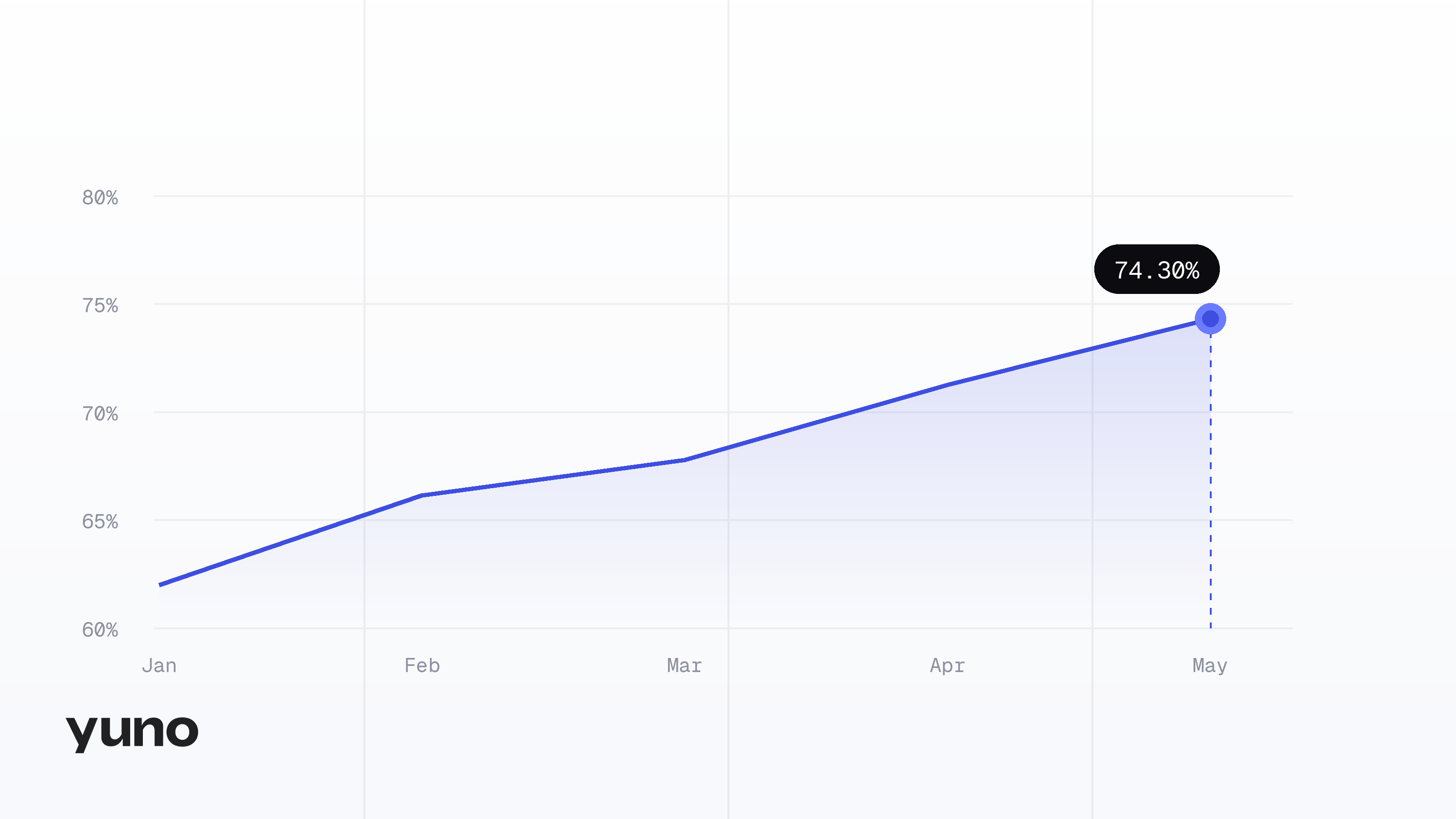
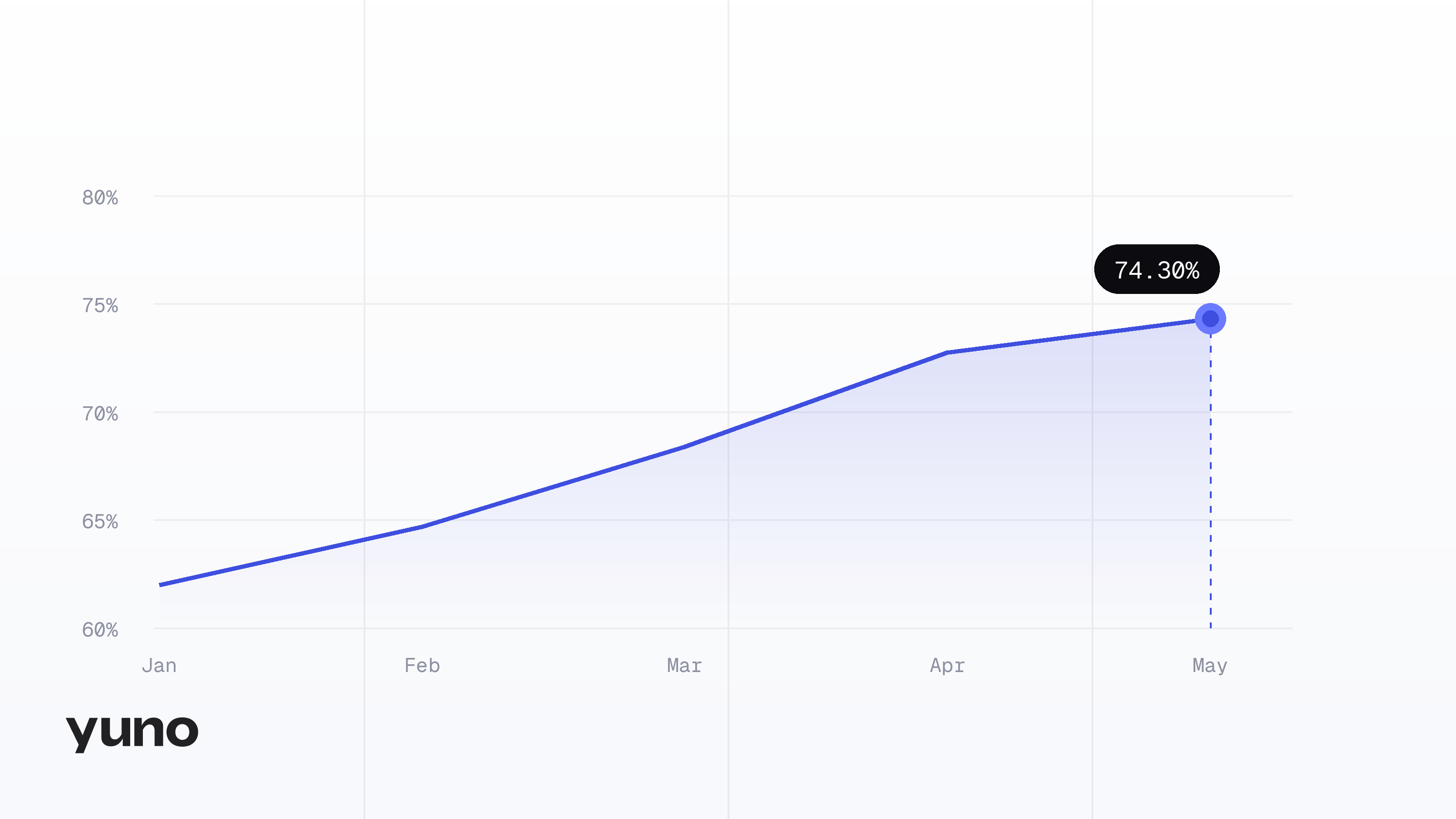
- Yuno's platform data shows an 8% average authorization rate uplift across enterprise merchants using smart routing, with an additional 8% of failed transactions recovered via fallback logic (Yuno platform data, 2026).
- AI-powered monitoring reduces authorization rate drop detection latency from days to seconds, limiting revenue exposure during provider degradation events.
- Multi-PSP visibility is not achievable from inside any single PSP relationship. It requires a neutral infrastructure layer positioned above all providers simultaneously.
Why Authorization Rate Is an Organizational Design Problem
The accountability gap is not a data problem or a technology problem. It is an operating design problem. When responsibility for a metric is distributed across functions without a named owner who also controls the relevant levers, the metric drifts.
Consider the typical sequence when authorization rates drop three percentage points over 48 hours. The decline registers in transaction logs immediately. But the signal has to travel through a reporting pipeline before it becomes visible to anyone with context. Finance notices a revenue variance in a weekly reconciliation. Engineering gets a ticket. Operations opens a PSP support case. By the time all three teams are in the same conversation, the drop has run for days.
We have seen this pattern across enterprise merchants in financial services, travel, and on-demand platforms. The delay is not caused by lazy teams. It is caused by a system where the person responsible for the outcome does not control the levers that drive it, and the person who controls the levers is not watching the outcome continuously.
The structural fix has two parts: unified visibility and named ownership. Most organizations try to solve the ownership problem first through reorganization or new job descriptions. That rarely works without solving the visibility problem simultaneously. You cannot hold a Head of Payments accountable for a number they cannot see in real time across all their providers.
What the Visibility Problem Actually Looks Like Across Multiple PSPs
Each PSP shows you its own authorization rate, not your authorization rate. That distinction matters more than most payment leaders realize until they have run a multi-provider stack long enough to see the divergence.
When you route 60% of volume through one provider and 40% through another, each provider's dashboard reflects its slice of your traffic. Neither dashboard tells you how the same card brand performs across both providers. Neither surfaces why your UK approval rate is falling while your German rate holds. Neither explains whether the decline is an issuer routing issue, a provider configuration gap, or a merchant category code mismatch on a specific BIN range.
From our integrations across retail, travel, and platform commerce verticals, the most common blind spot we encounter is this: merchants have no single view of issuer-level rejection codes aggregated across all PSPs simultaneously. They can export data from each provider, reconcile it manually in a spreadsheet, and build a picture retrospectively. That process takes hours. The authorization rate drop has already run its course.
This is the infrastructure gap that no amount of organizational restructuring can close. If the data does not exist in a unified layer, the accountability framework has nothing to operate on. For a deeper look at what real-time visibility actually requires at scale, our analysis of AI-powered payment monitoring covers the specific data architecture decisions that determine whether alerts arrive in seconds or days.
How to Improve Payment Approval Rates: A Three-Layer Framework
Improving authorization rates durably requires working across three layers: detection, diagnosis, and action. Most teams only optimize one or two, which is why gains erode after initial improvements.
Layer One: Detection That Runs Faster Than Your Reporting Cycle
Manual reporting cycles kill authorization rate recovery speed. By the time a weekly report surfaces a trend, the business has already absorbed the full revenue impact of the drop. Real-time monitoring with custom thresholds by provider, country, card brand, and volume tier is the baseline requirement.
Yuno's Monitors product operates exactly this way. Merchants define their own anomaly thresholds. When a provider's approval rate on Visa credit in France crosses the lower bound, the system flags it in seconds and can reroute traffic automatically before a human has opened a dashboard. Automated payment monitoring with custom routing rules is the first layer a Head of Payments should have in place before any deeper optimization work begins.
Layer Two: Diagnosis That Goes Below the Surface Metric
An authorization rate number is a summary. The actual cause lives in the decline codes. Soft declines from insufficient funds require different remediation than hard declines from issuer-blocked BINs. Timeout-related declines point to latency issues between your gateway and the issuer's network. Velocity declines suggest fraud model friction that retry logic can route around on a different provider path.
Without issuer-level breakdown by rejection code, aggregated across all your providers, the diagnosis step collapses into guessing. We have watched payment operations teams spend four to six hours on a single incident investigation because the relevant data sat in three separate portals that each required different login credentials and export formats.
The practical fix here is an AI assistant with access to your full transaction dataset across all PSPs. Ask it: "What are the top rejection codes from Mastercard debit in the UK over the last six hours, compared to yesterday?" The answer should arrive in seconds, not as a spreadsheet request to a data analyst.
Layer Three: Action With Authority and Speed
Detection and diagnosis are wasted without the ability to act. And action requires two things that are often missing: pre-configured routing rules that execute without human approval, and a named human owner who has the authority to change routing configuration without waiting for an engineering sprint.
Yuno's platform data shows that merchants with pre-configured fallback routing recover an additional 8% of failed transactions compared to merchants relying on manual rerouting (Yuno platform data, 2026). That gap exists entirely because manual processes are slow. The revenue is there to be recovered. The question is whether the infrastructure is fast enough to recover it.
What Payment Concierge Does That No Single PSP Can Replicate
Payment Concierge is an AI operations assistant that monitors your entire payment stack simultaneously, across every connected PSP, in real time. No single PSP can offer this capability, because each PSP's analytics are bounded by the traffic it processes.
The comparison matters. A PSP's built-in reporting tool is optimized to show you how that PSP is performing. It has no incentive to surface cases where a competitor provider routes your BIN range more effectively. Payment Concierge is neutral. It compares all your providers against each other, identifies the underperformer, and tells you exactly which routing change will recover the most volume, with the data to back the recommendation.
From a Head of Payments' practical standpoint, the workflow looks like this. You send a message in Slack: "Why did our approval rate drop 2.4 points on Amex in Germany this morning?" Payment Concierge returns issuer-level rejection code breakdown, PSP comparison for that corridor, and a specific routing recommendation, inside the same Slack thread. No portal login. No data export. No waiting for a data team to run a query.
The reporting layer matters too. Payment Concierge generates executive-ready reports in Excel, PDF, or PowerPoint format on demand, directly from the conversation. When the CFO asks for authorization rate performance by region at the end of the quarter, the Head of Payments is not spending a day compiling data. They ask Payment Concierge and forward the output. Payment Concierge's full capability set covers proactive anomaly alerts, PSP comparison, rejection analysis, and instant reporting in one interface.
Proof: What Closing the Gap Looks Like in Practice
Yuno's smart routing delivers an 8% average authorization rate uplift across enterprise merchants on the platform (Yuno platform data, 2026). That number compounds across transaction volume. For a merchant processing $500 million annually, an 8-point authorization rate improvement on a recoverable base represents tens of millions in revenue that previously leaked without a trace.
A large on-demand delivery platform operating across multiple markets reduced payment issue response time from five to ten minutes down to milliseconds after implementing automated monitoring with Yuno. Their payments team reduced time spent on disruption resolution by 80%. The operational gain is real, but the revenue gain from faster rerouting is what appears in the P&L.
A global ride-hailing platform reached approximately 90% payment approval rates across 50-plus countries using smart routing across 300-plus payment methods. That approval rate held as they expanded into ten new countries in eight months, which is a result that flat integration architectures cannot replicate at that speed. Understanding what actually drives payment approval rate improvements at enterprise scale helps contextualize why infrastructure choices determine outcome ranges.
The pattern we see consistently across verticals is this: merchants who close the accountability gap by unifying visibility and pre-authorizing routing actions outperform merchants who try to optimize within a single PSP relationship. The single-PSP ceiling is real, and it is structural.
Who Should Own the Authorization Rate Number
The Head of Payments should own the authorization rate, and they need three things to make that accountability functional rather than nominal. Named ownership without matching authority produces frustration, not results.
The three requirements are:
- A unified data layer that aggregates approval rates, rejection codes, and PSP performance across all providers in real time, not retrospectively.
- Pre-approved authority to adjust routing configuration without requiring an engineering sprint or vendor approval.
- An AI monitoring layer that proactively surfaces anomalies, eliminating the dependency on scheduled reports to detect problems.
Without all three, the Head of Payments owns the accountability but not the levers. They absorb the CFO's questions about approval rate variance without the ability to answer them fast or fix the underlying cause quickly.
The CFO's role in this framework is to fund the infrastructure that makes the first two requirements possible, and to set authorization rate as an explicit P&L line item with a named owner. When authorization rate accountability lives only in operations, finance tends to discover problems through revenue variance. When it lives in a shared executive context with a clear owner and real-time visibility, the conversation shifts from explaining past drops to preventing them.
The Practical Audit: Where to Start
If you want to improve payment approval rates and close the accountability gap in your organization, start with three audits before making any infrastructure or organizational changes.
- First, map how long it currently takes your organization to detect a 2-point authorization rate drop on a single provider. If the answer is longer than 15 minutes, your detection layer is too slow.
- Second, identify whether you can produce a single view of rejection codes aggregated across all your PSPs today without manual data reconciliation. If you cannot, your diagnosis layer is broken.
- Third, determine whether your Head of Payments can reroute transaction volume between providers without filing an engineering ticket. If they cannot, your action layer has an authority gap.
Those three questions locate exactly where the accountability gap lives in your stack. The answers determine which infrastructure investments close it fastest. A framework for improving authorization rates globally provides the next level of detail on routing strategy once the visibility and ownership foundations are in place.
- First, map how long it currently takes your organization to detect a 2-point authorization rate drop on a single provider. If the answer is longer than 15 minutes, your detection layer is too slow.
- Second, identify whether you can produce a single view of rejection codes aggregated across all your PSPs today without manual data reconciliation. If you cannot, your diagnosis layer is broken.
- Third, determine whether your Head of Payments can reroute transaction volume between providers without filing an engineering ticket. If they cannot, your action layer has an authority gap.
Authorization rate is not an engineering metric or an operations metric. It is a revenue metric with a direct line to the P&L. The organizations that treat it that way, with the infrastructure to match, are the ones that close the gap. The rest find out about drops in the next quarterly review.