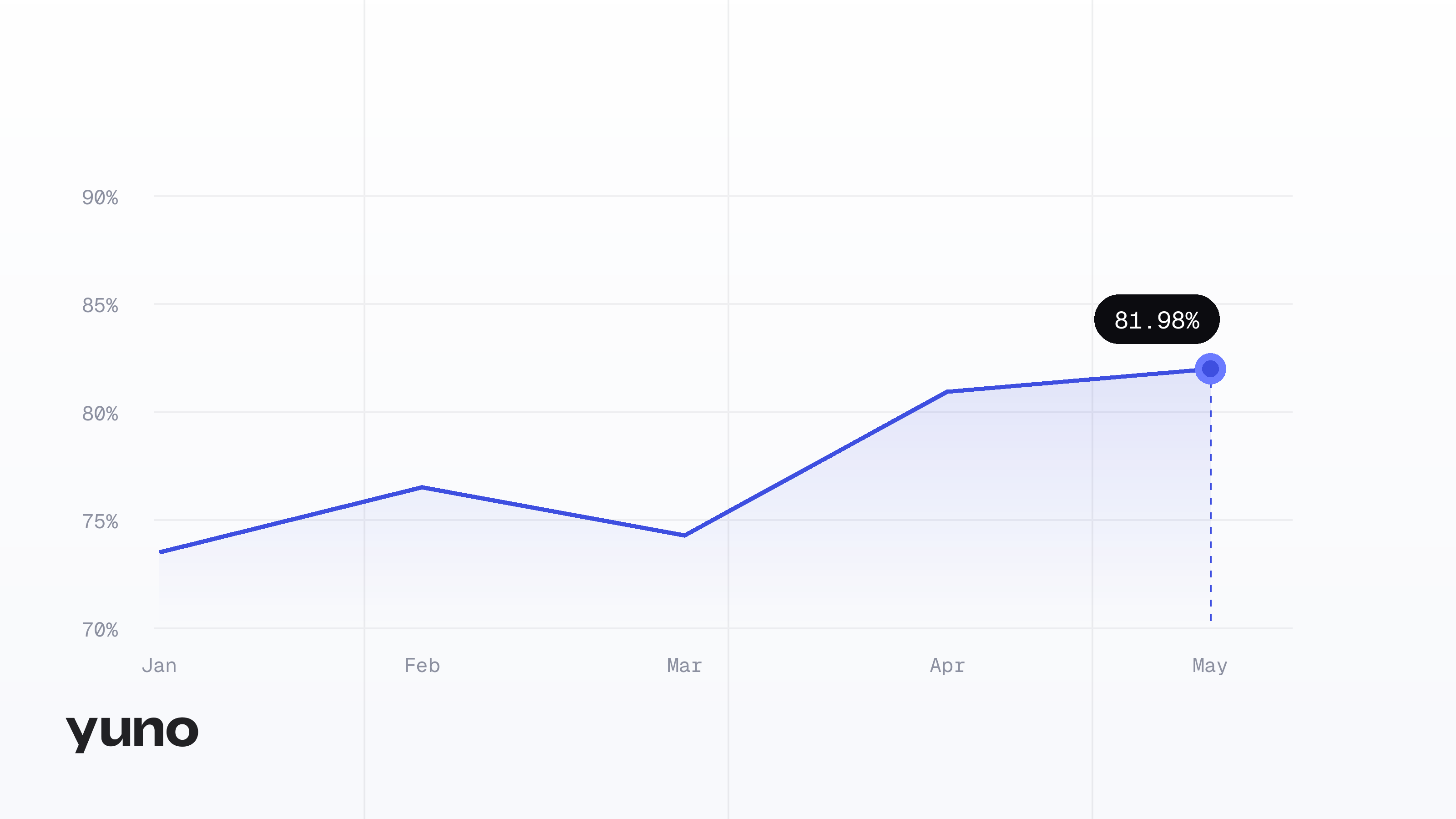
Acquirer escalation is a board-level event. It triggers fee assessments, processing restrictions, and reputational scrutiny that finance teams cannot quietly absorb. Visa's VAMP program has been live since April 2025. Mastercard's Global Merchant Audit Program launches April 1, 2027, giving enterprise merchants roughly eight months to improve payment approval rates and clean up their fraud and dispute exposure before the new thresholds apply.
Most compliance conversations land with the fraud team. That is the wrong frame. VAMP and GMAP are infrastructure problems, and treating them as purely operational issues is why merchants end up in remediation programs rather than avoiding them entirely.
Key Takeaways
- Visa VAMP and Mastercard GMAP both unify fraud and dispute monitoring into a single ratio, meaning merchants can breach thresholds even when either metric looks acceptable in isolation.
- GMAP launches April 1, 2027, replacing Mastercard's Acquirer Chargeback Monitoring Program; merchants have an eight-month window to audit and remediate before enforcement begins.
- Multi-PSP smart routing reduces ratio exposure by shifting volume toward higher-performing processor connections. Yuno's platform data shows an average 8% authorization rate uplift from smart routing across enterprise merchants (Yuno platform data, 2026).
- Applying 3DS selectively rather than universally reduces fraud signal without suppressing conversion for low-risk customers.
- Yuno's Risk Conditions capability delivers a 29% fraud reduction (Yuno product data, 2026), a proprietary benchmark that maps directly to GMAP and VAMP ratio improvement.
What VAMP and GMAP Actually Measure
Visa VAMP and Mastercard GMAP both replace the previous model of treating fraud and disputes as separate monitoring tracks, combining them into a single unified ratio assessed at the merchant level. The structural consequence is that a merchant with a moderate fraud rate and a moderate dispute rate can now breach program thresholds even if neither metric would have triggered action under the old programs.
Visa's VAMP launched in April 2025, consolidating the Visa Dispute Monitoring Program and Visa Fraud Monitoring Program into one acquirer-level view. Mastercard's GMAP follows the same logic, launching April 1, 2027, and replacing the Acquirer Chargeback Monitoring Program with four new monitoring categories and low-volume triggers that catch merchants who previously flew under the radar.
The acquirer-level monitoring component in GMAP is a material change. Under the legacy ACMP, scrutiny focused on the merchant's own numbers. GMAP also holds acquirers responsible for aggregate portfolio performance, which means acquirers are now financially incentivized to push merchants toward remediation faster than before. Enterprise merchants should expect their acquirers to act earlier and more assertively once GMAP goes live.
Why This Is an Infrastructure Problem, Not a Fraud Team Problem
VAMP and GMAP ratios are calculated across every transaction processed on the network, which means the inputs to your ratio are determined by routing decisions, processor selection, and integration quality, not just by fraud team rules. A fraud team can tighten rules to suppress chargebacks, but if the underlying routing infrastructure is sending high-risk volume to processors that generate elevated dispute rates, the ratio problem persists.
We see this pattern consistently across enterprise merchants on Yuno's platform. A merchant may have clean fraud tooling but fragmented PSP connections with no visibility into which processor is generating the bulk of their dispute volume. They find out about a ratio problem from their acquirer, not from their own data, because they have no unified view of combined fraud and dispute performance across providers.
The CFO frame here is direct. An acquirer escalation carries processing fee assessments, potential volume restrictions, and in extreme cases, termination of the processing relationship. Every one of those outcomes is a financial event with measurable P&L impact. The remediation cost is orders of magnitude higher than the infrastructure investment required to prevent it.
How to Audit Your VAMP and GMAP Exposure Before April 2027
A meaningful VAMP and GMAP audit has three components: ratio reconstruction, attribution, and remediation sequencing. Most merchants can complete the first two internally if they have unified payment data. The third requires routing infrastructure that can act on what the audit surfaces.
Step One: Reconstruct Your Combined Ratio by Network
Pull dispute and fraud report data separately for Visa transactions and Mastercard transactions. Combine them into a single numerator for each network, then divide by total transaction volume for that network. This is the number your acquirer sees. If you cannot reconstruct this figure from your current data infrastructure, that is itself the finding: your data does not give you the visibility the programs require.
Do this at the processor level as well as the aggregate level. A combined ratio that looks acceptable at the top line can mask a single processor connection generating concentrated exposure. Aggregate ratios are averages. Programs flag you on the average, but the fix usually lives in one or two underperforming connections.
Step Two: Attribute Ratio Drivers to Routing Decisions
Once you have processor-level ratios, map each processor's contribution to your overall number. In our integrations across enterprise retail and marketplace merchants, concentrated ratio exposure almost always traces to a small number of routing decisions: volume sent to processors with weak authorization logic, geographic mismatches between transaction origin and processor acquiring region, or fallback routing that sends declined transactions to a secondary processor without adjusting fraud parameters.
Flag transactions that were routed as fallbacks. These often carry elevated fraud and dispute rates because the original decline was a risk signal that the fallback routing ignored. Improving payment approval rates through smart fallback logic means routing to a better-fit processor, not just any available processor.
Step Three: Sequence Your Remediation by Ratio Impact
Not all fixes carry equal weight. Prioritize interventions by their expected ratio impact in this order.
- Reroute volume away from processor connections with above-average dispute or fraud rates. This is the highest-leverage single action, because it improves the ratio at every transaction, not just at the margin.
- Apply 3DS selectively to high-risk segments rather than universally. Blanket 3DS adds friction for legitimate customers without meaningfully deterring sophisticated fraud. Targeted 3DS through configurable risk rule sets reduces fraud signal while protecting conversion.
- Configure real-time velocity rules and allowlists for known-good customer segments. This reduces false fraud flags that inflate the numerator without any corresponding fraud event.
- Automate chargeback response workflows. Faster, better-structured evidence submissions improve win rates on legitimate disputes, which reduces the net dispute count that feeds the ratio.
How Smart Routing Directly Improves VAMP and GMAP Ratios
Smart routing reduces VAMP and GMAP ratio exposure by directing each transaction to the processor connection most likely to authorize it cleanly, which reduces both the fraud signals that come from declined-then-retried transactions and the dispute rates that concentrate on specific processor connections. The authorization rate improvement is also a ratio improvement, because a higher authorization denominator dilutes the impact of any fixed numerator.
Yuno's platform data shows an 8% average authorization rate uplift from smart routing across enterprise merchants (Yuno platform data, 2026). For a merchant processing one million Mastercard transactions per month, an 8% uplift in the denominator alone meaningfully compresses the combined ratio. Pair that with rerouting away from high-dispute processors and the ratio improvement compounds.
For merchants who want to understand best practices to improve payment authorization rates across global markets, the mechanics are consistent: processor fit by geography, card type, and transaction profile reduces declines, and every avoided decline is one fewer retry that carries elevated fraud risk.
The neutrality of Yuno's routing is relevant here in a way that single-PSP merchants cannot replicate. A processor that also acquires has a structural interest in keeping volume on its own rails. Yuno does not acquire, which means routing recommendations are based entirely on which processor produces the best outcome for the merchant's ratio, not on where margin is highest for the provider.
The 29% Fraud Reduction That Maps to GMAP Thresholds
Fraud reduction that maps directly to GMAP's combined ratio requires acting before a transaction becomes a chargeback, not after it has already been disputed. Rule-based fraud prevention that operates at the transaction level, before authorization, is structurally more effective than post-authorization dispute management.
Yuno's Risk Conditions capability delivers a 29% fraud reduction across enterprise merchants on the platform (Yuno product data, 2026). That is a proprietary benchmark built from real transaction data across multiple verticals. No competitor can publish this number because it requires operating across multi-PSP infrastructure at scale and observing the combined effect of routing and fraud rule interactions, not just fraud rules in isolation.
The mechanism matters for CFOs reviewing this as a compliance investment. Risk Conditions works by letting merchants configure velocity rules, allowlists, and blocklists through a no-code interface, with those rules applied before external fraud checks. This means fewer transactions hit expensive external fraud tools unnecessarily, and fewer legitimate customers trigger 3DS friction. The fraud reduction number reflects both effects: fewer fraudulent transactions approved, and fewer false flags that inflate dispute counts.
For merchants already using third-party fraud tools, Risk Conditions acts as a pre-filter. Known-bad actors are blocked before the external tool sees the transaction. Known-good customers bypass unnecessary checks. The external tool handles genuinely ambiguous cases. This layered architecture is what produces a 29% reduction rather than the incremental improvement a single-tool approach delivers.
What the GMAP 2027 Deadline Means for CFO and CCO Planning
The April 2027 GMAP go-live creates a defined remediation window with a hard deadline, which is a structurally different compliance risk than the rolling thresholds merchants are used to managing. Acquirers will begin communicating GMAP exposure assessments to merchants ahead of launch, and those communications will escalate to board-level attention if the numbers are not clean.
For CFOs, the financial exposure has three components. First, the processing fee assessments that apply immediately upon program identification. Second, the operational cost of a formal remediation plan, which requires dedicated compliance and payments team bandwidth for multiple months. Third, the revenue at risk if processing restrictions are imposed during remediation. The third component is the largest and the most variable, which is why early infrastructure investment has a measurable IRR advantage over waiting for an acquirer notification.
CCOs face a governance dimension that CFOs do not always track. GMAP introduces acquirer-level monitoring, which means your acquirer's own program standing depends partly on your merchant ratio. That creates a different kind of relationship pressure than a merchant-only program, and it means acquirer conversations about GMAP will carry a different urgency than ACMP conversations did. Compliance officers who can show their acquirer a concrete remediation infrastructure, not just a fraud team process, will have a materially better negotiating position when those conversations happen.
The deeper question for both CFOs and CCOs is whether the current payment infrastructure gives them the data visibility to have that conversation at all. If your fraud and dispute data lives in separate systems, or if you cannot reconstruct a combined ratio by network and processor today, the infrastructure gap is the compliance gap. Closing it before April 2027 is not a fraud team project. It is a finance and technology leadership decision.
Our published analysis of the Mastercard GMAP program and what the April 2027 launch means for reconciliation infrastructure covers the data unification steps in more depth. The audit framework above is designed to sit on top of that foundation.
The Practical Takeaway for Enterprise Payment Leaders
Merchants who enter GMAP's April 2027 monitoring window with clean, unified fraud and dispute data, multi-PSP routing intelligence, and pre-configured risk rules will avoid escalation entirely. Merchants who treat GMAP as a compliance form to file in Q1 2027 will be negotiating remediation plans with their acquirer instead.
The audit framework is three steps: reconstruct your combined ratio by network and processor, attribute the exposure to specific routing decisions, and sequence remediation by ratio impact. None of those steps require new team headcount. They require infrastructure that gives you the data to act on.
- Reconstruct your combined ratio by network and processor.
- Attribute the exposure to specific routing decisions.
- Sequence remediation by ratio impact.
From our work with enterprise merchants across retail, travel, and marketplace verticals, the merchants who maintain strong approval rates and low fraud ratios simultaneously share one structural characteristic. They have a unified view of performance across every processor connection, and they can change routing logic in hours rather than weeks. That operational agility is what VAMP and GMAP reward, because the programs update continuously and the merchants who respond fastest stay below thresholds longest.
For payment leaders who want to understand the approval rate mechanics in more detail, the merchants consistently achieving the highest approval rates all share a common routing infrastructure. The compliance benefit of that infrastructure is the same as the revenue benefit: fewer failed transactions, cleaner processor relationships, and ratios that stay well inside program thresholds without manual intervention.