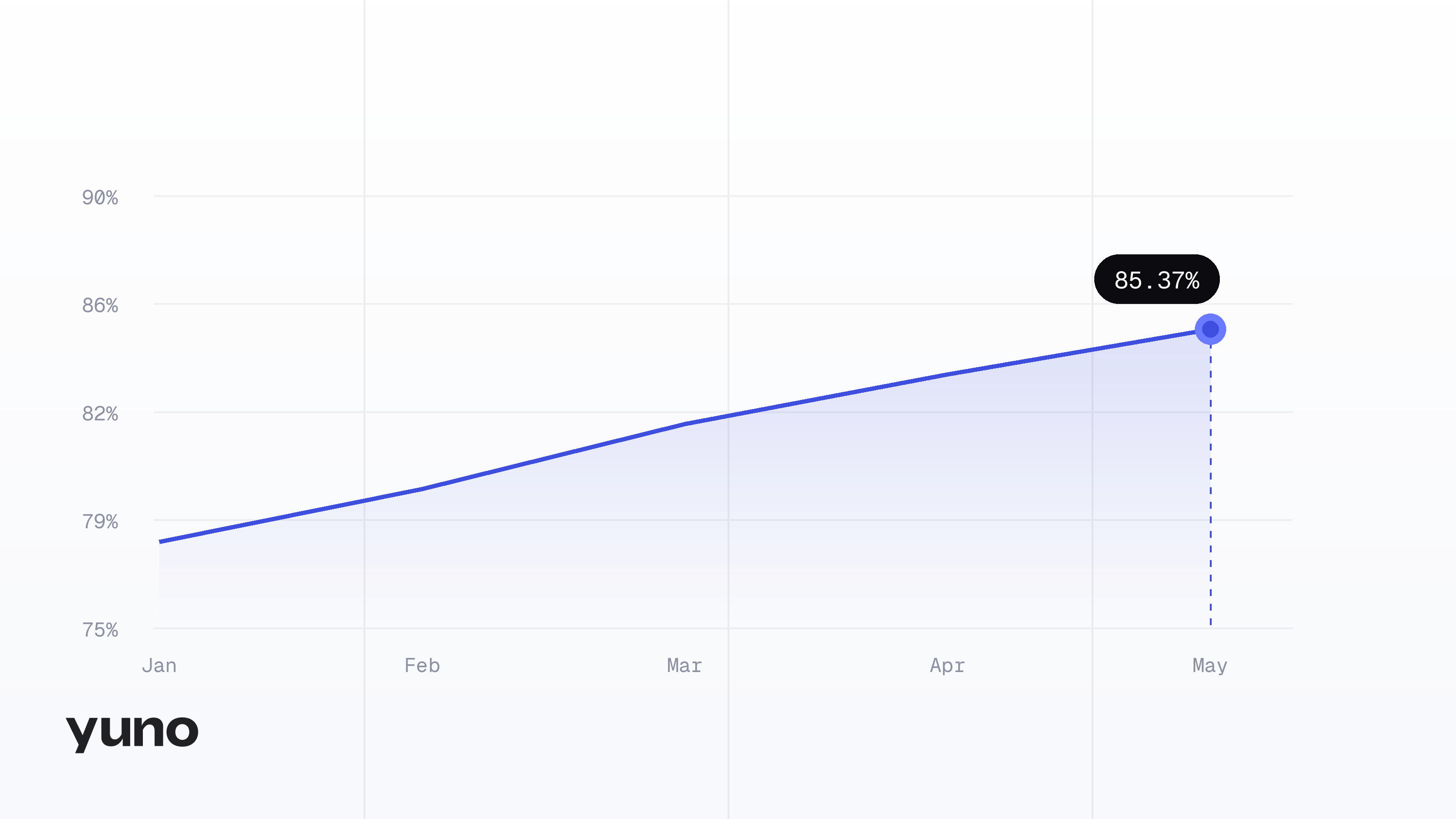
Your card-on-file vault is probably a liability disguised as infrastructure. When we review enterprise payment stacks ahead of a PSP migration, the same problem surfaces consistently: tokens issued by the current provider cannot travel to the new one. The re-tokenization bill arrives. Authorization rates degrade. Engineering scrambles. This is not a migration problem. It is a tokenization platform architecture problem, and it starts long before anyone mentions switching acquirers.
Key Takeaways
- Network token requesters are certified entities that request scheme-issued tokens directly from Visa or Mastercard. Most merchants have never owned this relationship themselves.
- Visa reports a 4.6% authorization rate uplift on card-not-present transactions when network tokens replace raw PANs. Mastercard reports 2.1% on average.
- Gateway vault tokens are PSP-specific. They cannot route across acquirers, which means a PSP migration triggers re-tokenization of your entire card-on-file base.
- Multi-acquirer token portability eliminates re-enrollment events during PSP switches, protecting recurring payment authorization rates throughout the migration window.
- Yuno's tokenization platform holds the token requester relationship at the orchestration layer, not at the PSP level. Tokens survive acquirer changes by design.
What Does a Network Token Requester Actually Do?
A network token requester is a certified entity that submits tokenization requests directly to a card scheme (Visa, Mastercard, or Amex) and receives a scheme-issued token in return. That token replaces the raw primary account number (PAN) in every downstream transaction, carrying cryptographic proof of its origin and scope.
Most merchants have never held this relationship directly. They accepted tokenization as a feature offered by their PSP, which quietly registered itself as the requester. The token was scheme-issued, technically. But the requester ID belonged to the provider, not the merchant.
That distinction is where authorization rate risk hides.
Why Token Architecture Is the Wrong Thing to Audit Last
The token requester ID determines who controls the token's lifecycle, portability, and domain restrictions. When that ID belongs to a PSP, the token is operationally tethered to that PSP's acquiring rails, regardless of what the scheme specification technically permits.
We've seen this create the same migration trap across verticals: a subscription platform, a large travel marketplace, an enterprise gaming operator. Each had a card-on-file base running cleanly on a single acquirer. Each assumed their tokenized credentials were assets they owned. They were not. They were credentials issued to the PSP's requester ID, scoped to that PSP's domain.
When the merchant wanted to add a second acquirer for redundancy, or move volume to a better-priced provider, the tokens could not follow. Every stored card required re-enrollment. Customers who never updated their card details saw their next recurring charge decline. Authorization rates dropped for 60 to 90 days while the new vault built up a valid credential set.
The Three Token Types That Actually Matter for Enterprise Card-on-File
Gateway vault tokens, scheme tokens, and network tokens solve different problems, and conflating them is the root cause of most architecture mistakes we encounter in enterprise payment stacks. Understanding the difference determines whether your tokenization platform gives you acquirer flexibility or locks you in.
Gateway Vault Tokens
These replace the PAN in your system with a provider-specific string. They protect storage and reduce your PCI scope. They do not travel. If your acquirer goes down or you want to route to a second provider, the token is worthless outside the vault that issued it. This is the most common token type in card-on-file implementations today, and it is the one that creates re-tokenization costs during migrations.
Scheme Tokens (Network Tokens)
Visa and Mastercard issue these directly. They carry a cryptogram, a domain restriction, and a lifecycle management protocol that automatically updates when the underlying card is reissued or expires. Issuers trust scheme tokens more than raw PANs because the card network has pre-validated the credential. Visa reports a 4.6% authorization rate uplift on card-not-present transactions using network tokens versus raw PANs. Mastercard reports an average uplift of 2.1% (Visa and Mastercard network data).
Multi-Acquirer Portable Tokens
This is not a separate token type. It is an architectural outcome: a scheme token issued to a requester ID that is not owned by a single PSP. When the requester relationship sits at the orchestration layer, the token can route across any acquirer connected to that layer. The scheme cryptogram travels with the transaction regardless of which provider processes it. This is what most PSP pitch decks describe as "network tokenization" without disclosing who holds the requester ID.
For a deeper look at how this plays out in practice across acquirers, Yuno's engineering team documented the economics of multi-acquirer token portability and what scheme tokenization actually changes for card-on-file operations.
How the Wrong Tokenization Platform Architecture Degrades Authorization Rates
Authorization rate degradation from a PSP-locked token vault follows a predictable pattern: re-enrollment gap, stale credential declines, and issuer trust reset. Each stage compounds the previous one, and the window before rates recover is typically 60 to 120 days.
Here is what the pattern looks like in practice. A merchant migrates volume from one acquirer to a second. The existing card-on-file base cannot move. The merchant either re-bills against the old vault (maintaining two processing relationships, which defeats the purpose) or begins re-enrollment (which requires customer action that most customers will not complete before the next billing cycle).
In our integrations across subscription and marketplace verticals, this re-enrollment gap is the single largest contributor to involuntary churn during infrastructure migrations. It is not visible in sandbox testing. It only appears when the first recurring billing cycle runs against a card-on-file base that has not re-authenticated.
The second problem is issuer trust. Issuers score token credentials based on the requester's history with the scheme. A new requester ID, even one backed by a legitimate scheme token, starts with a thin trust signal. Authorization rates on that requester ID will underperform a seasoned one for the first several months. Merchants who switch PSPs effectively restart their issuer trust accumulation.
What Multi-Acquirer Token Portability Solves
Multi-acquirer token portability means a scheme token issued to your orchestration layer's requester ID can route through any acquirer connected to that layer, without re-tokenization and without an authorization rate gap. The token's cryptogram and domain controls travel with the transaction.
Yuno's platform holds the token requester relationship at the orchestration layer. When a merchant adds a second acquirer, or reroutes volume away from an underperforming provider, the card-on-file base is unaffected. The tokens are scheme-issued, the requester ID is Yuno's (not the downstream PSP's), and the lifecycle management (automatic card updates, cryptogram rotation) runs continuously regardless of which acquirer processes the charge.
The practical outcome: merchants running card-on-file across multiple acquirers on Yuno's Token Vault do not experience re-tokenization events when they switch or add providers. The authorization rate baseline transfers because the issuer trust history follows the requester ID, not the acquirer.
For enterprise merchants managing recurring payments across multiple markets, this is not a minor operational convenience. Yuno platform data shows smart routing lifts authorization rates by 8% on average across enterprise merchants (Yuno platform data, 2026). When that routing flexibility depends on portable tokens, the two capabilities compound each other. You cannot route optimally if your tokens cannot follow the route.
How to Audit Your Current Tokenization Platform for PSP Lock-in
Three questions determine whether your existing tokenization platform creates acquirer lock-in or genuine portability. Ask them before you commit to any infrastructure change that involves adding or switching payment providers.
- Who holds the token requester ID?
- What happens to your token base if you add a second acquirer?
- Who manages token lifecycle automatically?
Question One: Who Holds the Token Requester ID?
If your current PSP holds the requester ID, your tokens are tethered. Ask your provider directly. If the answer is ambiguous or the question surfaces confusion, that is itself informative. A provider that gives you genuine token portability will answer this without hesitation and point you to the scheme certification documentation.
Question Two: What Happens to Your Token Base if You Add a Second Acquirer?
The correct answer is: nothing. Tokens route through the new acquirer immediately. If the answer involves a migration plan, a re-enrollment campaign, or a phased transition, your tokens are not portable. You are looking at a re-tokenization project, not an acquirer addition.
Question Three: Who Manages Token Lifecycle Automatically?
Network tokens require ongoing lifecycle management: automatic updates when cards are reissued, cryptogram rotation, and expiry handling. If this is managed by your PSP, it stops working the moment you reduce or exit that relationship. Lifecycle management must live at the layer that owns the requester ID. If that layer is your PSP, you lose lifecycle continuity when you migrate.
For engineering teams building or auditing this stack, Yuno's five-step network tokenization guide covers the implementation sequence in detail, including how to structure the requester ID relationship for portability from the start.
What Authorization Rate Architecture Looks Like When Tokenization Is Done Right
When the tokenization platform owns the requester ID and manages lifecycle at the orchestration layer, authorization rate strategy becomes genuinely additive. Each capability compounds rather than competing with portability constraints.
Smart routing needs valid credentials to function. If tokens are PSP-locked, routing decisions are constrained by which provider holds the token. You cannot route a recurring transaction to a better-priced acquirer if that acquirer cannot accept the stored credential. The routing logic becomes theoretical.
With portable network tokens, routing is unconstrained. A global ride-hailing platform running on Yuno's infrastructure routes recurring charges across multiple acquirers per market, selecting the provider with the best current approval rate and cost profile for each transaction. The token follows the routing decision. The card-on-file base does not fragment across providers.
From our work with enterprise subscription platforms across Europe and North America, the compounding effect is significant. An 8% routing uplift on authorization rates (Yuno platform data, 2026) layered over a 2-4% network token uplift from issuer trust is not simply additive. It removes the floor on how low authorization rates can go during infrastructure changes, because the infrastructure change itself no longer forces a credential reset.
For platforms processing high-frequency recurring transactions, this architecture also connects directly to fraud resilience. Domain-restricted network tokens reduce the attack surface for card-not-present fraud because the token is cryptographically scoped to a specific merchant and transaction type. A stolen token carries no value outside its registered domain. This is separate from the authorization rate benefit but compounds the business case for scheme-level tokenization over gateway vaulting. Yuno's fraud layer uses this domain control as an additional risk signal, reducing fraud rates by 29% across merchants using Risk Conditions (Yuno product data, 2026).
For high-frequency transaction environments, the gaming payments context is directly analogous. The authorization rate architecture guide for gaming platforms covers how token portability interacts with multi-market routing at volume.
The Practical Takeaway for Enterprise CTOs
If you are evaluating a tokenization platform, the first question is not about features. It is about ownership. Who holds the requester ID? What happens to your card-on-file base when you add or switch an acquirer? If the answer requires a migration plan, you are not buying a tokenization platform. You are buying a vault with a lock you do not control.
The architecture that protects authorization rates is straightforward: scheme tokens issued to a requester ID at the orchestration layer, lifecycle management that is PSP-agnostic, and domain controls that travel with the token across any acquirer you route to. That is what multi-acquirer portability means in practice, and it is the architectural decision that determines whether your card-on-file base is an asset or a migration liability.
Start the audit now. Ask who holds your requester ID. If you do not get a clean answer, you already have the information you need.